Why Most Fat Loss Programs Fail
Why Most Fat Loss Programs Fail (And What Actually Works)
Introduction
The weight loss industry has never offered more solutions.
Meal plans.
Fat burners.
Detoxes.
Low-carb diets.
Low-fat diets.
Intermittent fasting.

Yet obesity rates continue to rise, and many people find themselves trapped in the same cycle:
Lose weight.
Regain it.
Start over.
The problem isn’t a lack of effort.
The problem is that most fat loss programs focus on short-term weight loss rather than long-term fat loss.
And those are not the same thing.
The Traditional Fat Loss Model
Most programs follow a simple formula:
Eat less.
Move more.
At first, it works.
Body weight drops.
Motivation increases.
Progress seems easy.

Then things begin to change.
Hunger increases.
Energy decreases.
Workouts become harder.
Recovery slows down.
Eventually, progress stalls.
Many people assume they need more discipline.
In reality, their body is doing exactly what it was designed to do.
It is adapting. (adaptive thermogenesis)
Your Body Is Not Fighting You
One of the biggest misconceptions in fitness is that the body is somehow broken when fat loss slows down. (understand fat loss plateaus)

The truth is the opposite.
Your body is incredibly effective at protecting itself.
When calories remain low for extended periods:
- Energy expenditure decreases
- Hunger hormones increase
- Daily movement often declines
- Training performance suffers
- Recovery becomes more difficult
This process is known as adaptive thermogenesis.
It’s not a flaw.
It’s survival.
The problem is that most fat loss programs never account for it.
Why More Restriction Usually Backfires
When progress slows, many people respond by:
- Cutting calories again
- Adding more cardio
- Eliminating entire food groups
- Training harder
Sometimes this works temporarily.
But eventually fatigue accumulates.
Muscle mass can be lost.
Motivation drops.
Adherence becomes harder.
The plan becomes increasingly difficult to sustain.
And sustainability is what determines long-term success.
The Missing Piece: Managing Adaptation
Successful fat loss isn’t simply about creating a calorie deficit.
It’s about managing the adaptations that occur while you’re in that deficit.
This requires a more strategic approach.
Over the years, research and practical experience have shown that several tools can help maintain progress while reducing fatigue:
- Resistance training
- Adequate protein intake
- Structured refeed days
- Planned diet breaks
- Progressive activity targets
- Strategic carbohydrate management
- Muscle preservation
- Recovery optimization
Individually, these tools are useful.
Combined properly, they become far more powerful.
Learn about nutrient partitioning here
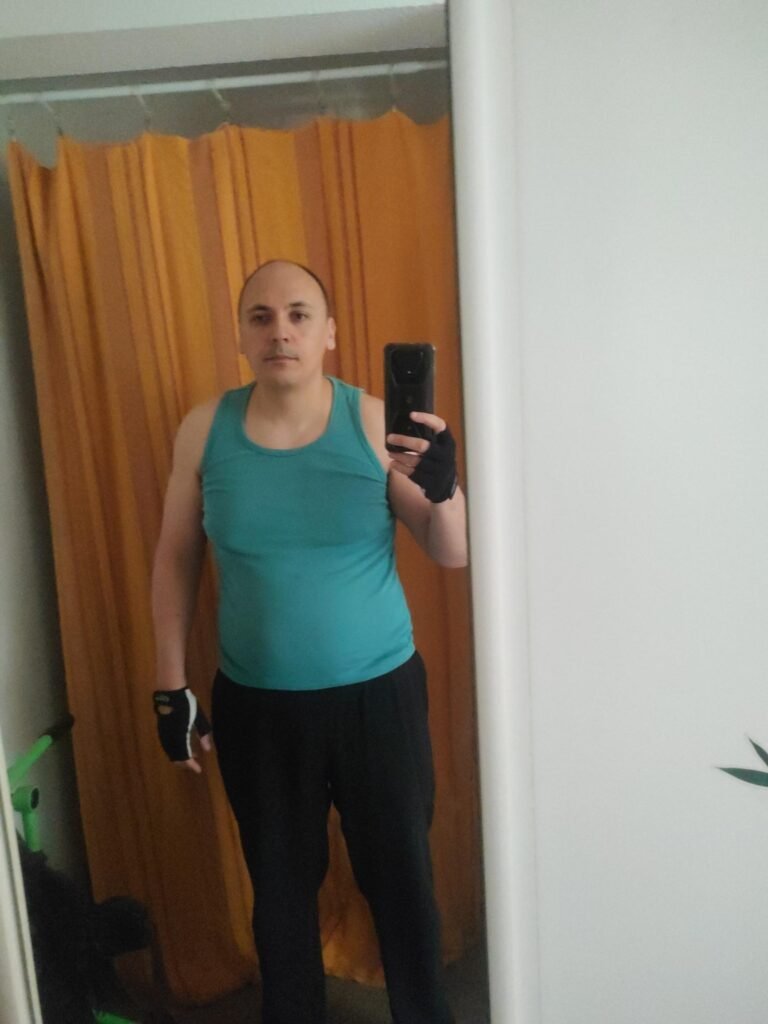
What Helped Me Lose 57 Pounds
When I lost 57 pounds after the age of 40, I learned something important.
The challenge wasn’t creating a calorie deficit.

The challenge was maintaining that deficit long enough to reach the goal without sacrificing muscle, energy, motivation, or quality of life.
There were periods where progress slowed dramatically.
There were phases where fatigue increased.
And there were moments where simply pushing harder would have made things worse.
What allowed me to continue progressing was learning how to manage adaptation instead of fighting it.
Strategic refeeds.
Planned diet breaks.
Resistance training.
Daily movement.
Patience.
The process became far more sustainable once I stopped viewing fat loss as a battle of willpower.
More about my fitness journey
The Framework I Eventually Developed
After years of studying nutrition, coaching clients, and applying these principles to my own transformation, I realized something:
Most people don’t need more information.
They need a system.
A framework that organizes proven strategies into a coherent process.
This realization eventually became the foundation of what I now call the Ultimate Fat Loss Protocol.
Rather than relying on endless restriction, the approach focuses on managing adaptation while preserving muscle mass, performance, and adherence.
The objective is not simply to lose weight.
The objective is to lose fat while maintaining the physical and mental resources needed to sustain the process.
Because successful fat loss should improve your life—not consume it.
What Actually Works
Despite all the conflicting advice online, the fundamentals remain remarkably consistent.
Long-term fat loss is built on:
- A sustainable calorie deficit
- High protein intake
- Resistance training
- Daily movement
- Adequate recovery
- Strategic calorie cycling when appropriate
- Patience and consistency
There is no magic solution.
But there is a smarter way to approach the process.
One that respects physiology instead of fighting it.
Final Thoughts
Most fat loss programs fail because they focus exclusively on restriction.
They ignore adaptation.
They ignore recovery.
They ignore sustainability.
The result is predictable:
Short-term success followed by long-term frustration.
The most effective fat loss strategy isn’t the most aggressive one.
It’s the one you can sustain while preserving your health, muscle mass, energy, and motivation.
Because lasting transformation isn’t built through suffering.
It’s built through intelligent structure.
Sam H
Sources
Hall, K. D., & Kahan, S. (2018). Maintenance of Lost Weight and Long-Term Management of Obesity. Medical Clinics of North America.
Trexler, E. T., Smith-Ryan, A. E., & Norton, L. E. (2014). Metabolic Adaptation to Weight Loss. Journal of the International Society of Sports Nutrition.
Rosenbaum, M., & Leibel, R. L. (2010). Adaptive Thermogenesis in Humans. International Journal of Obesity.
Helms, E. R., Aragon, A. A., & Fitschen, P. J. (2014). Evidence-Based Recommendations for Natural Bodybuilding Contest Preparation. Journal of the International Society of Sports Nutrition.