
Why More Cardio Isn’t Always Better for Fat Loss
The truth about calorie burn, recovery, muscle preservation, and sustainable fat loss
Introduction
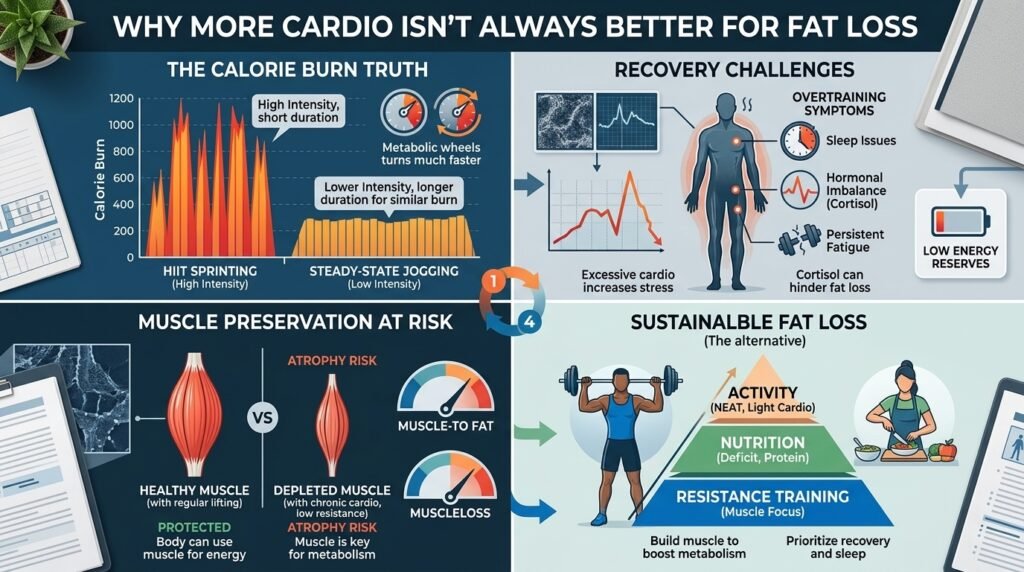
If cardio burns calories, then more cardio should mean more fat loss.
Right?
So why not run longer?
Add another session?
Do cardio every day?
The logic seems simple.
But the human body is not a calculator where adding another hour of cardio automatically produces another hour of progress.
Cardio can be an extremely useful tool for fat loss.
But more is not always better.
At some point, additional cardio can increase fatigue, interfere with recovery, reduce training quality, and make a calorie deficit harder to sustain.
The goal isn’t to do as much cardio as possible.
The goal is to use the right amount for your objective.
Cardio Does Burn Calories
Let’s start with the obvious.
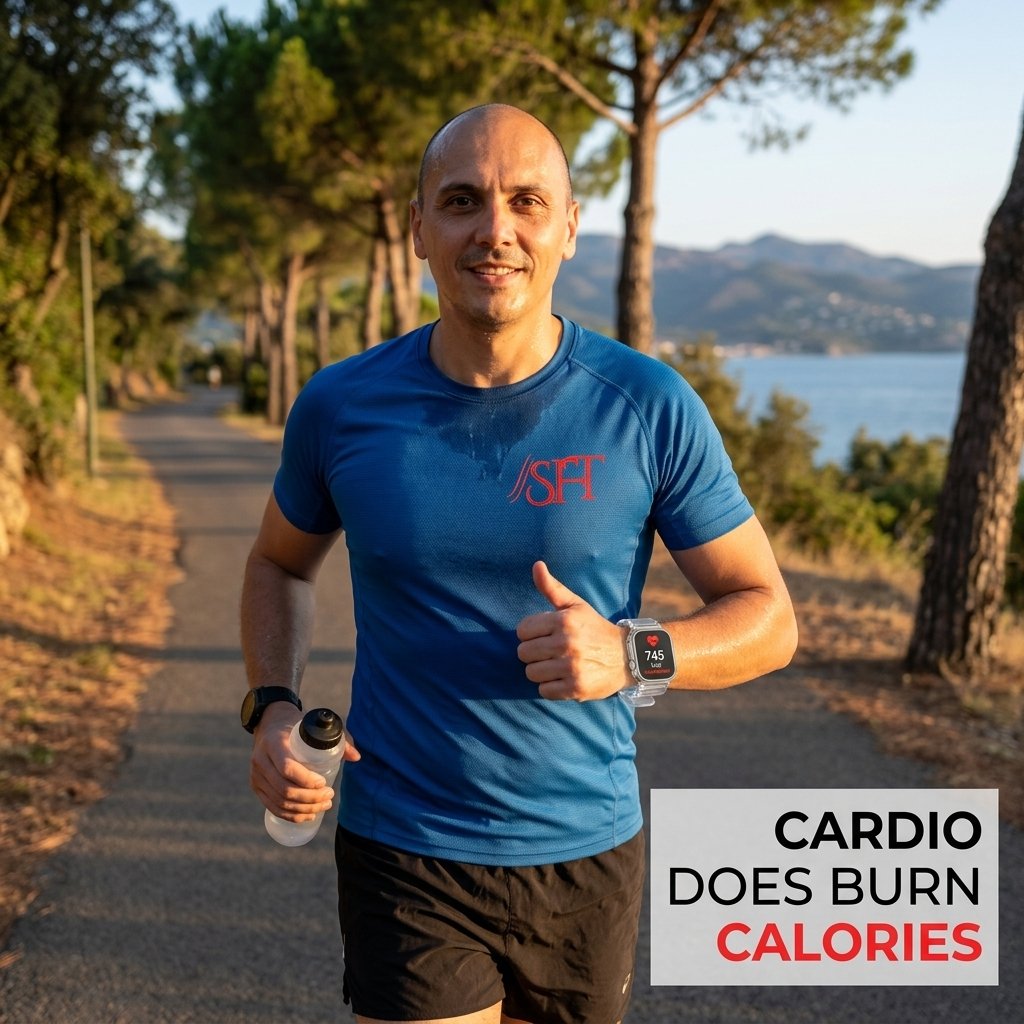
Cardiovascular exercise increases energy expenditure.
Walking, cycling, running, swimming, rowing and other forms of aerobic exercise can all contribute to a calorie deficit.
That’s useful during fat loss.
But there’s a difference between:
using cardio to help create a deficit
and
using cardio as the primary tool for creating an increasingly aggressive deficit.
The first can be sustainable.
The second can become a problem.
The Problem With Constantly Adding Cardio
Imagine your diet stops producing the same rate of weight loss.
You could:
- reduce calories
- increase cardio
- increase daily movement
- maintain your current approach and reassess
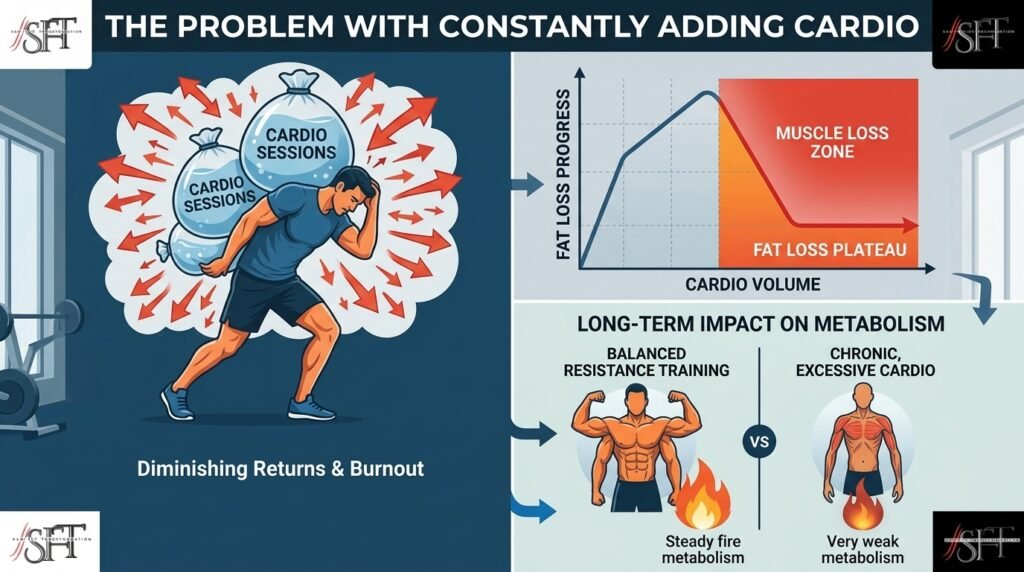
Many people automatically choose option two.
30 minutes becomes 45.
45 becomes 60.
Three sessions become five.
Eventually, the person is spending hours every week exercising simply to maintain a deficit that has become increasingly difficult to tolerate.
And that’s where the problem begins.
Cardio Has a Recovery Cost

Exercise isn’t free.
It creates a physiological demand that your body has to recover from.
The harder and longer you train, the more important recovery becomes.
Excessive cardio combined with calorie restriction can contribute to:
- increased fatigue
- reduced training performance
- poorer recovery
- greater hunger
- reduced motivation
- difficulty maintaining muscle
This is particularly important when you’re already resistance training several times per week.
Your body doesn’t have separate recovery accounts for cardio and weight training.
The total training load matters.
This is one reason Energy Availability matters so much during fat loss.
Cardio and Muscle Preservation
This is where things become more nuanced.
You will sometimes hear:
“Cardio kills muscle.”
That’s simply not accurate.
Combining aerobic and resistance training can work extremely well.
In fact, research shows that concurrent training can improve both cardiovascular fitness and body composition.
The potential problem is how much, how often, how intensely, and which type of cardio you perform.
Some research has found that high volumes of endurance training can interfere with strength and hypertrophy adaptations, particularly when running is involved and training frequency or duration becomes high.
But newer evidence is more reassuring.
A 2023 systematic review and meta-analysis found no significant difference in whole-muscle hypertrophy between resistance training alone and concurrent training overall, although some analyses suggested greater interference at the muscle-fiber level when HIIT was included.
And a 2026 umbrella review of meta-analyses suggests that the so-called interference effect depends heavily on factors such as endurance modality, intensity, training status and program design.
So the message isn’t:
“Don’t do cardio if you want to keep muscle.”
It’s:
“Don’t treat cardio volume as unlimited.”
Cardio vs. NEAT
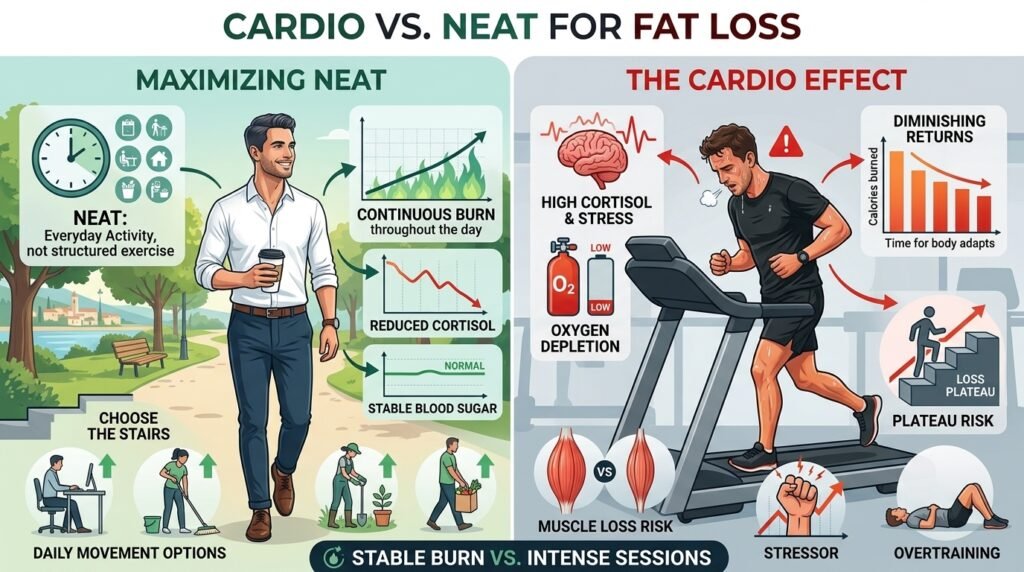
There’s another reason I don’t believe cardio should automatically be increased whenever fat loss slows.
Your body can adapt to increased exercise.
You may consciously add an hour of cardio…
…but unconsciously move less during the rest of the day.
You sit more.
You walk less.
You become less spontaneous.
Your NEAT decreases.
The additional calories you expected to burn may therefore be smaller than predicted.
This doesn’t mean exercise stops working.
It means total daily energy expenditure is more complicated than the calorie number displayed on a treadmill.
That’s why I prefer looking at the whole picture rather than chasing exercise calories.
Cardio Should Support Your Diet — Not Punish You
There’s a psychological problem with excessive cardio too.
If you start thinking:
“I ate too much, so I need to burn it off.”
Exercise becomes punishment.
And once exercise becomes punishment, consistency becomes much harder.
A better mindset is:
Cardio is a tool.
Use it to:
- improve cardiovascular fitness
- increase energy expenditure
- support health
- improve work capacity
- make your calorie deficit easier to manage
But don’t use it to compensate endlessly for an unsustainable diet.
How Much Cardio Do You Actually Need?
There is no universal number.
The right amount depends on:
- your current fitness level
- your calorie intake
- your resistance training volume
- your recovery capacity
- your fat-loss goal
- your lifestyle
- your preferences
For someone sedentary, simply walking more may produce a meaningful increase in energy expenditure.
For someone already training six days per week, adding large amounts of cardio may provide a much smaller benefit relative to the additional recovery cost.
This is why individualization matters.
The best cardio program isn’t the one that burns the most calories.
It’s the one that produces useful results without compromising everything else.
My Approach After Losing 58 Pounds
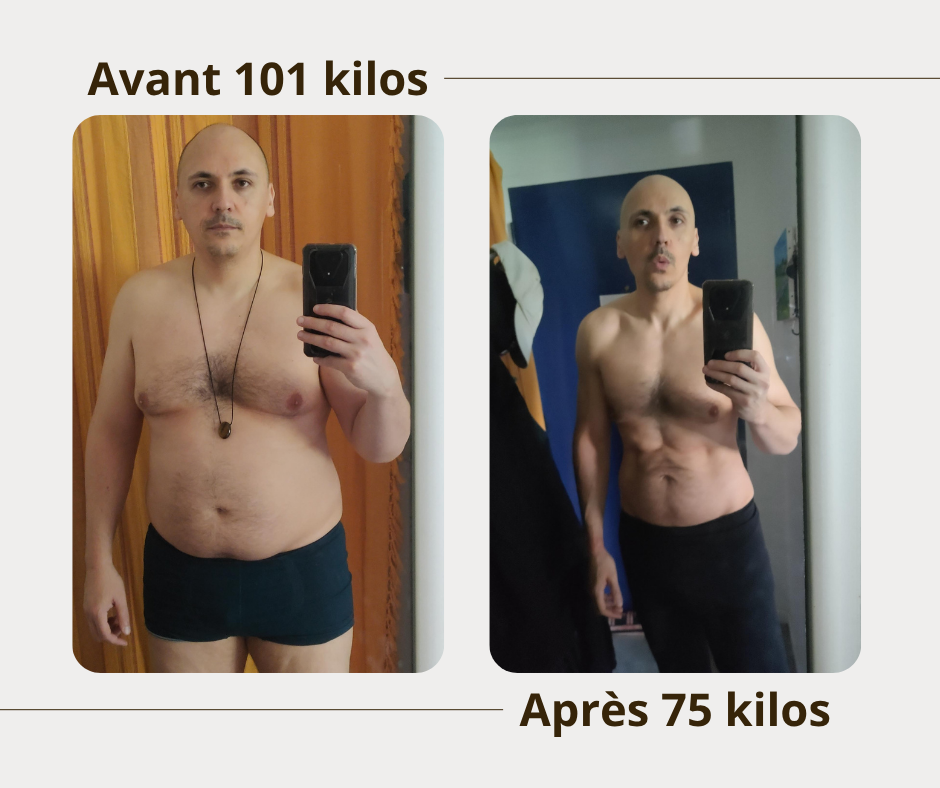
When I lost 58 pounds after the age of 40, I learned that doing more wasn’t always the answer.
I could have tried to accelerate the process by continuously increasing cardio.
Instead, I focused on creating a deficit I could actually sustain.
Resistance training remained a priority.
Daily movement mattered.
Cardio was used strategically.
And when fatigue started accumulating, the answer wasn’t automatically to push harder.
Sometimes the smarter move was to recover, adjust calories, or use a refeed or diet break.
That allowed me to keep training, preserve muscle, and maintain motivation throughout a much longer fat-loss process.
Because losing fat is only half the objective.
The other half is being able to keep going.
=>More about my journey ?
Scientific Precision

The relationship between aerobic and resistance training is often described as the concurrent training effect or interference effect.
The concern is that large amounts of endurance training could compromise adaptations to resistance training.
However, the scientific literature does not support the simplistic idea that cardio automatically prevents muscle growth.
The effect appears to depend on several variables:
- endurance modality
- training volume
- intensity
- frequency
- exercise order
- recovery between sessions
- nutritional status
For example, an earlier meta-analysis found that running produced greater interference with strength and hypertrophy outcomes than cycling, particularly as endurance frequency and duration increased.
More recent evidence suggests that concurrent training can preserve hypertrophy while improving aerobic fitness, particularly when programming variables are appropriately managed.
The practical conclusion is therefore not to avoid cardio.
It’s to dose it intelligently.
The Smarter Approach
Instead of asking:
“How much cardio can I possibly tolerate?”
Ask:
“How much cardio do I need to support my goal?”
Start with the minimum effective dose.
Maintain resistance training.
Monitor performance.
Monitor recovery.
Keep daily movement consistent.
Then adjust only when necessary.
Sometimes adding cardio is the right solution.
Sometimes reducing calories slightly is better.
Sometimes increasing NEAT is easier.
And sometimes the correct answer is simply to stop pushing and allow your body to recover.
=>Energy Availability: One of the Hidden Reason So Many Diets Fail
Final Thoughts
Cardio works.
But more cardio isn’t automatically better.
Fat loss is a balance between energy expenditure, nutrition, training, recovery, and adherence.
The best strategy isn’t the one that burns the most calories today.
It’s the one that allows you to keep progressing next month, next season, and eventually after you’ve reached your goal.
Use cardio as a tool—not as punishment.
That’s how you make it work for you instead of letting it take over your entire fat-loss strategy.
Scientific Sources
- Wilson, J. M., et al. (2012). Concurrent Training: A Meta-Analysis Examining Interference of Aerobic and Resistance Exercises. Journal of Strength and Conditioning Research.
- Monserdà-Vilaró, A., et al. (2023). Effects of Concurrent Resistance and Endurance Training Using Continuous or Intermittent Protocols on Muscle Hypertrophy: Systematic Review With Meta-Analysis. Journal of Strength and Conditioning Research.
- Held, S., et al. (2026). Maximizing Adaptations in Concurrent Training: An Umbrella Review of Meta-analyses. Sports Medicine.
- Conceição, M., et al. (2026). Concurrent Training With Long-Interval HIIT Does Not Impair Skeletal Muscle Protein Synthesis or Hypertrophy. Journal of Applied Physiology.
=> ULTIMATE LEAN BULK PROTOCOL | LEAN BULK Program – Build Muscle Without Fat Gain